The History
Two intertwined stories: that of a family that reached the Piacenza area between the thirteenth and fourteenth centuries, and that of a winery that has farmed the Albarola hills since 1796.
Piacenza roots,
since the 13th century
The Barattieri presence around Piacenza has its roots between the thirteenth and fourteenth centuries, when the family wove ties with the city's most important patrician houses. The first great possession was the fief of San Pietro in Cerro, for a long time the centre of the family estate and the engine of its economic and social growth.
The story of Albarola begins in 1796 and is bound to a marriage: Count Alberico Barattieri married Maria Trevani, daughter of Marquis Trevani, a noble family of Parma with significant landholdings in the Val Nure. With that marriage the Barattieri acquired the Albarola agricultural estate and the manor house, built in the early years of the eighteenth century.
Since then the estate has been handed down from generation to generation, keeping the bond between the family and this land intact.
- 13th century
The Barattieri family reaches the Piacenza area and ties itself to the city's great patrician houses.
- San Pietro in Cerro
The first great possession: for a long time the heart of the family estate.
- 1796
Count Alberico Barattieri marries Maria Trevani: Albarola enters the family's history.
- Today
The estate still belongs to the family, handed down without interruption for over two centuries.
The turning point
of the 20th century
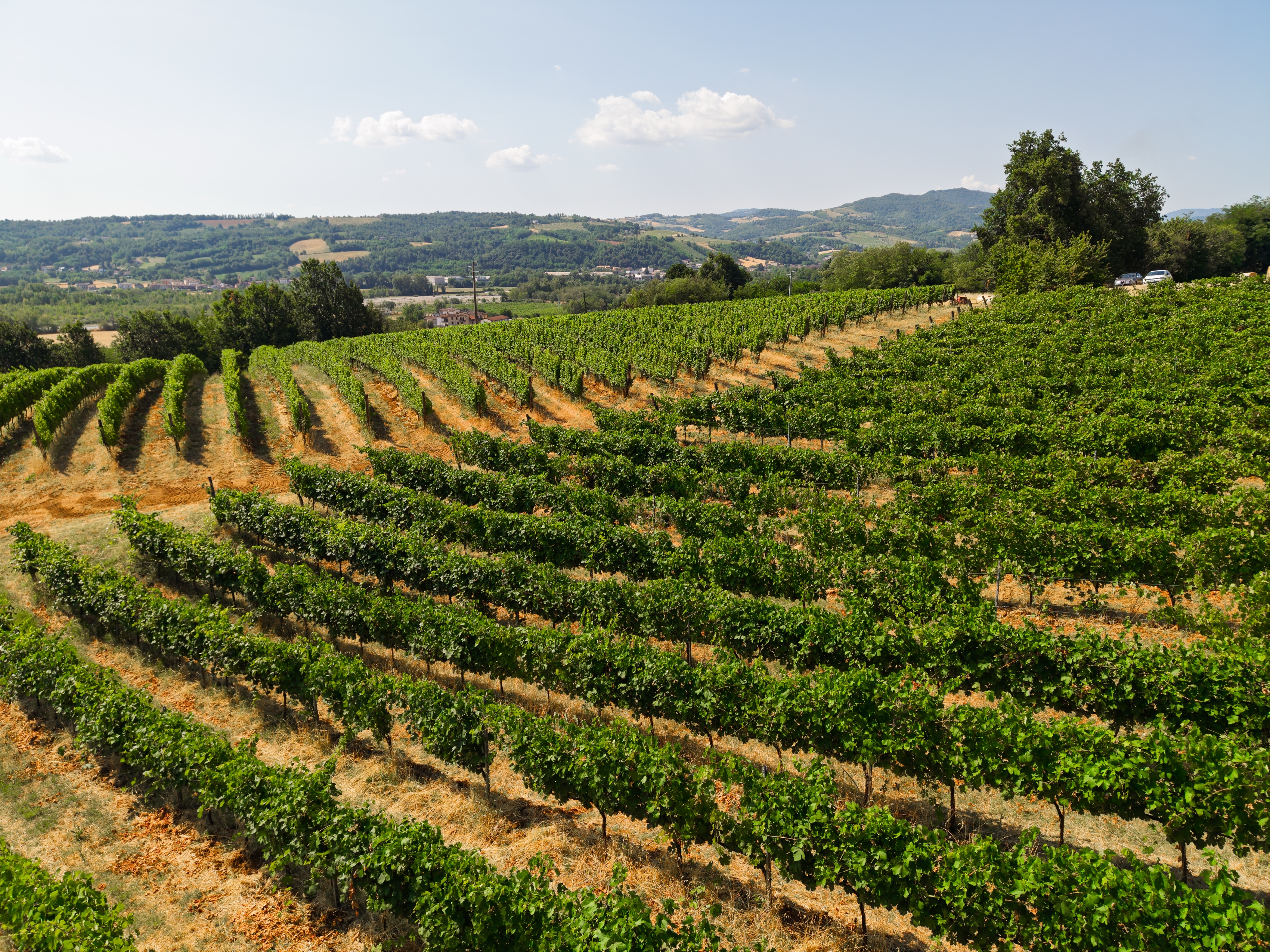
In the twentieth century Count Giulio Barattieri left the villa, the land and the entire farm to his nephew, Count Otto. It was Otto who sensed the estate's extraordinary winegrowing potential: vines had long been cultivated, but an in-depth agronomic analysis of the soils revealed the area's exceptional vocation with clarity.
With this awareness, Otto planted new vineyards on every free plot and progressively turned the property from a traditional farm into a modern, specialised wine estate. In the same years he sold several plots to the tenants who worked them: part of that land would become the present village of Albarola.
That same spirit still guides the winery today: preserving a story that began centuries ago and turning it, harvest after harvest, into wines that tell the authentic identity of the Colli Piacentini.